
zzwin | Jueteng: Unraveling a Deep-Rooted Cultural Phenomenon
zzwin’s Exploring the socio-cultural, economic, and political dimensions of the illegal numbers game jueteng in the Philippines, and analyzing the complexities surrounding its persistence and impact.
The Intricacies of Jueteng: Unraveling a Deep-Rooted Cultural Phenomenon
Jueteng, an illegal numbers game that thrives in the Philippines, has captivated both players and critics alike for decades. Despite ongoing crackdowns, the game remains resilient, reflecting deep-seated cultural, social, and economic factors. One cannot discuss jueteng without acknowledging its pervasive influence on Filipino society and the complex layers that maintain its existence.
What is Jueteng?
Jueteng is a popular form of illegal gambling in the Philippines, similar to a lottery. However, unlike official lotteries, jueteng operates outside the bounds of legal regulation. The game involves players betting on any two-number combination, usually ranging from 1 to 37. Much of jueteng's allure lies in its simplicity, accessibility, and the promise of quick monetary rewards.
The Role of Bet Collectors and Coordinators
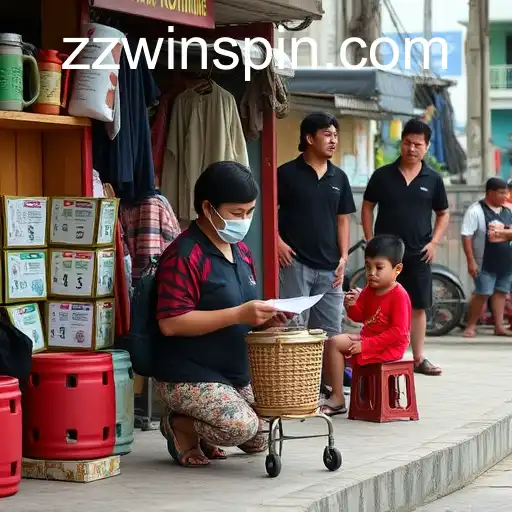
Central to the jueteng operation are the bet collectors, locally known as kubradors. These individuals work directly with the community, collecting bets and serving as intermediaries between bettors and the coordinators. The coordinators are responsible for managing the flow of bets and ensuring the complex structure of operations runs smoothly.
This decentralized network is both a strength and a weakness, as it allows the system to be expansive and adaptable. It's a well-oiled machine that functions efficiently despite its illegality. This setup often sees communities rallying around these figures, who are not just facilitators of a game, but local personalities who play various roles within their neighborhoods.
The Socio-Economic Impacts of Jueteng
Jueteng's persistence can be partially attributed to socioeconomic conditions in the Philippines. For many, the game is a financial crutch, a way to potentially improve their economic status with little initial investment. It thrives in areas where poverty is prevalent, providing a sense of hope for those living on the margins of society.
Furthermore, for those involved in the deeper workings of jueteng, from bet collectors to coordinators, it provides a source of income. Often, these roles are filled by community members who find themselves with limited economic opportunities. Thus, while the game is officially condemned, it is quietly tolerated, if not tacitly accepted, in many communities for the economic relief it sometimes provides.
Cultural Resonance
Jueteng's roots run deep within Filipino culture, forming a complex tapestry of traditional beliefs, superstitions, and communal ties. It is not just a game but a social activity that connects people. It occupies a space in the cultural heart of the nation, where family members, friends, and even neighbors bond over shared hopes and dreams wrapped in numbers.
This cultural acceptance presents a significant hurdle for authorities attempting to dismantle it. Efforts to educate communities about the financial and legal risks often face resistance, as these campaigns fail to address the cultural dimensions of why people engage with jueteng in the first place.
Political Dimensions
The political landscape is also inextricably linked to jueteng. Throughout history, ties between local politicians and jueteng operators have been reported, creating a shadow economy that influences local and national politics. With money and political power intertwined, breaking this cycle proves challenging. Political figures allegedly use jueteng as a resource to bolster campaign funds, making anti-jueteng platforms a double-edged sword, cutting into the very networks they rely on.
The intersection of politics and jueteng illuminates a broader narrative of corruption and governance issues, where illicit activities find protection and patronage becomes a currency beyond donations and votes.
Challenges to Eradication
Efforts to curb jueteng have been met with varied success, as enforcement is often inconsistent and hindered by corruption. Law enforcement agencies are sometimes stymied by the very bureaucratic systems they seek to uphold. This inconsistency does little to dissuade operators or players.
Educational campaigns have attempted to shift public perception, focusing on the legal and moral aspects of gambling, yet they have had limited impact on the ground. Cultural integration and local economic conditions continue to be formidable obstacles to these initiatives.
The Possibility of Legalization
Some argue that the legalization of jueteng could serve as a method to control it, turning it from a shadowy enterprise into a legitimate source of revenue. By regulating the industry, authorities might reduce the associated corruption and channel funds into government coffers rather than into illegal circuits. Yet, this approach is contentious and fraught with ethical debates.
Legalization proponents highlight the potential for structured oversight, while opponents underscore the risk of normalizing gambling and potentially exacerbating social issues related to addiction and crime.
Conclusion
Jueteng is emblematic of the complex socio-economic and cultural dynamics at play in the Philippines. It stands as a microcosm of bigger societal issues, blending the aspirations of individuals with broader national challenges. Any attempt to eradicate jueteng or integrate it into the legal system must navigate these multifaceted dimensions to be genuinely effective.
